




AK Clinics
AK Clinics- India most trusted & recommended Hair, Skin, Cosmetic Surgery Clinics in India run by Dr. Kapil Dua & Dr. Aman Dua with a mission empowering one million indians to look and feel their best.
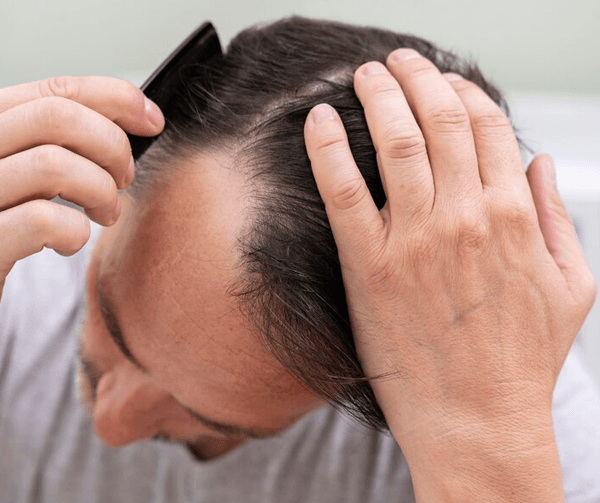
If your hairline is slowly receding or your crown looks thinner than before, it is easy to blame stress, diet, or ageing. However, one of the most common causes of progressive thinning is a hormone called DHT (dihydrotestosterone).
DHT is closely linked to androgenetic alopecia, also known as pattern hair loss. Androgenetic alopecia affects approximately 58% of men aged 30 to 50 in India and a significant proportion of women, particularly those with PCOS or hormonal imbalances.
This is where DHT blockers for hair loss become important. In this guide, we explain what DHT blockers are, how they work, which treatments are most clinically effective, when natural methods may help, and when advanced options such as PRP therapy, GFC therapy, or hair transplant may be required.
QUICK ANSWER — WHAT ARE DHT BLOCKERS?
DHT blockers reduce the activity of 5-alpha-reductase, the enzyme that converts testosterone into DHT. By lowering DHT levels at the scalp, they help preserve hair follicles and slow the progression of androgenetic alopecia. Most effective options, ranked by clinical DHT reduction:
Table of Contents
DHT blockers are treatments that reduce the production or effect of dihydrotestosterone, the hormone linked to follicle miniaturisation in androgenetic alopecia. They primarily work by inhibiting 5-alpha-reductase, the enzyme that converts testosterone into DHT. As a result, lowering DHT activity at the scalp level helps slow hair loss and protect existing hair density.
In clinical practice at AK Clinics, anti-DHT treatments often form the foundation of care for hormone-related hair thinning, especially when the condition is identified early.
Key Statistic
Androgenetic alopecia affects approximately 58% of men aged 30 to 50 in India, along with a significant proportion of women — particularly those with PCOS or hormonal imbalances.
More on DHT Blockers & Hair Loss
Many people assume all hair loss is the same, but there are several types with different underlying causes. Conditions such as androgenetic alopecia, stress-induced shedding, and nutritional deficiencies can appear similar in the early stages, making it difficult to identify the exact cause without proper evaluation.
| Type of Hair Loss | Main Cause | Pattern | Treatment Approach |
|---|---|---|---|
| DHT / Androgenetic Alopecia | Hormonal sensitivity to DHT | Hairline, crown, or diffuse thinning | DHT blockers, PRP/GFC, hair transplant in advanced cases |
| Telogen Effluvium | Stress, illness, hormonal changes | Diffuse shedding | Treat the trigger, lifestyle correction |
| Nutritional Hair Loss | Iron, B12, Vitamin D, protein deficiency | Diffuse thinning | Diet correction and supplements |
| Alopecia Areata | Autoimmune condition | Patchy hair loss | Dermatological treatment |
A single DHT test cannot confirm the exact cause of hair loss, but it can give useful clues when combined with other health markers. Common tests that may help include:
Important Note
Normal DHT levels do not always rule out hormone-related hair loss. In many cases of pattern hair loss, the issue is scalp follicle sensitivity to DHT — follicles react strongly even when blood hormone levels are within the normal range. Clinical pattern assessment matters more than a blood test alone.
DR. AMAN DUA — CO-FOUNDER AND CHIEF DERMATOLOGIST, AK CLINICS
“Hair loss evaluation is not just about running a DHT test. We look at the pattern, the scalp condition, the patient’s lifestyle, nutritional status, and medical history together. A blood report gives us one piece of the puzzle — the clinical examination gives us the rest. This is why a proper consultation always comes before a treatment plan.”
Consult our specialists at AK Clinics for a personalised evaluation.
Doctors use a stage-based approach rather than a single product recommendation. A useful reference is the Norwood scale, which grades male pattern hair loss from 1 (minimal) to 7 (advanced). For women, doctors apply the Ludwig classification instead. A dermatologist identifies your grade before recommending treatment.
| Stage | Grade | Typical Approach |
|---|---|---|
| Early Stage | Norwood 1 to 3 | Natural support, topical treatments, and DHT blocker medicines. Many patients see meaningful results with medicines alone at this stage. |
| Moderate Stage | Norwood 3 to 5 | DHT blocker medicines combined with PRP therapy or GFC therapy for follicle support and improved density. |
| Advanced Stage | Norwood 5 to 7 | Hair transplant with ongoing maintenance therapy to protect remaining native hair. |
DHT blocker medicines work by inhibiting 5-alpha-reductase, reducing the amount of DHT produced in the body. Here is how the most commonly used options compare clinically. For a detailed breakdown of finasteride, dutasteride, topical options, and dosing, see our dedicated guide on DHT Blocker Medicines for Hair Loss in the series hub above.
| Treatment | DHT Reduction | Prescription | Side Effect Risk | Best Suited For |
|---|---|---|---|---|
| Finasteride (oral) | 70 to 73% | Yes | Low to moderate | Men, early to moderate thinning |
| Dutasteride (oral) | 90 to 94% | Yes | Moderate | Men, selected cases under supervision |
| Topical Finasteride | Local scalp DHT reduction | Yes | Very low | Men concerned about systemic side effects |
| Spironolactone | Anti-androgen (moderate) | Yes | Low (requires monitoring) | Women only — not suitable for men |
| Saw Palmetto (natural) | ~32% | No | Very low | Early stage, natural preference |
| Pumpkin Seed Oil (natural) | ~40% hair count improvement | No | Very low | Early stage, dietary support |
| Minoxidil | 0% — not a DHT blocker | No / Yes (oral) | Low to moderate | Combined therapy alongside DHT blockers |
If you are weighing up minoxidil versus DHT blockers, our dedicated comparison guide in the series hub covers both in full, including combination therapy recommendations.
Women also produce DHT, and androgen sensitivity can contribute to female pattern thinning. As a result, treatment is not limited to men. Treatment options differ from men because doctors do not recommend finasteride for women of childbearing age due to risks of birth defects.
Spironolactone is a prescription medication with anti-androgen properties. By blocking androgen receptors, it reduces the effect of DHT and testosterone on hair follicles. Doctors commonly prescribe it for women with androgenetic alopecia, especially those with PCOS or other signs of elevated androgen activity such as facial hair or irregular cycles. Note that spironolactone is not suitable for men and requires regular monitoring of potassium levels and blood pressure.
Several natural options have clinical or research support. Although none are as potent as prescription medicines, they can be part of a broader hair health plan — especially at early stages.
For a complete breakdown of foods, supplements, and lifestyle changes, see our dedicated guide on 12 Most Powerful Natural DHT Blockers in the series hub above.
While anti-DHT treatments help control the hormonal trigger, regenerative treatments focus on improving follicle health and supporting regrowth in the moderate-to-advanced stages. These are not alternatives to DHT blockers — they work best in combination.
PRP therapy uses platelet-rich plasma to stimulate weakened follicles and support the scalp environment. GFC therapy, in addition, uses concentrated growth factors for more targeted follicle repair and activation. Doctors often recommend these when there is visible thinning, but follicles are still active. Neither replaces DHT-blocking treatment on its own.
Best Results
PRP and GFC are most effective when started while follicles are still active — typically at Norwood grades 3 to 5. Waiting until follicles are fully dormant reduces the benefit significantly.
Doctors recommend a hair transplant when DHT-driven hair loss has progressed to visible balding (Norwood 5 to 7 in men) and non-surgical treatments can no longer restore adequate density. Doctors consider surgery when:
Important
A hair transplant does not stop DHT-related hair loss in untreated areas. Maintenance with DHT blockers, PRP, or GFC is advised alongside or after surgery to protect remaining native hair. See our guide on hair transplant cost in India to understand the full picture.
Shampoos marketed as DHT blockers are popular, but their role in hair loss treatment is often misunderstood. They can help with scalp hygiene, dandruff and inflammation control, and creating a healthier scalp environment. That said, these products support topical treatment routines but should not be seen as a replacement for medical treatment.
If you are relying on a shampoo to control hair loss, it is important to understand what it can realistically deliver. See our detailed evidence review — Do DHT-Blocking Shampoos Work? — in the series hub above.
Worried about side effects? You are not alone. Many people delay treatment because they fear sexual side effects, but the actual risk depends on the type of treatment, dosage, medical history, and how the medicine is prescribed.
Since DHT plays a role in several body functions, possible side effects may include:
However, these side effects are not universal and often resolve after adjusting dosage or switching to topical formulations. A dermatologist will review your full health picture before prescribing.
Topical Option
Topical finasteride carries significantly less systemic absorption than oral finasteride, making it a lower-risk option for patients concerned about sexual side effects — while still achieving meaningful scalp DHT reduction.
Our doctors often observe that patients come in with the same complaint — hair fall — but the underlying reason may be very different. Some have early androgenetic alopecia, some have nutritional shedding, and some have mixed causes. Therefore, diagnosis must always come before treatment.
At AK Clinics, the focus is on detailed evaluation rather than a generic protocol. You can consult specialists in Delhi, Ludhiana, or Bangalore for a personalised treatment plan based on your stage, scalp condition, and expectations. Consultations are free and include a written cost estimate.

AK Clinics- India most trusted & recommended Hair, Skin, Cosmetic Surgery Clinics in India run by Dr. Kapil Dua & Dr. Aman Dua.


Leave a Comment