Medical Disclaimer: This article is for informational and educational purposes only and does not replace medical advice. Hair transplant suitability and results vary from person to person. Always consult a qualified hair transplant surgeon before making any treatment decision.
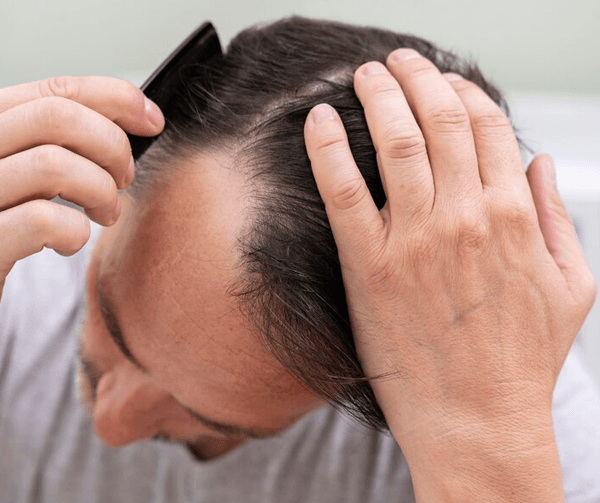
Hair transplantation has become one of the most effective long-term solutions for people experiencing hair loss or advanced baldness. Over the years, advances in surgical techniques, instruments, and graft handling have introduced a range of hair transplant techniques, giving patients more treatment options than ever before.
India is also emerging as a major hub for hair restoration, with industry estimates suggesting that around 3,50,000 hair transplant surgeries are performed annually in the country. With this growth, patients often feel confused about which technique to choose and which approach may work best for their hair loss pattern.
This guide explains the different hair transplant techniques available in India, how they differ, when each technique may be appropriate, and why choosing the right technique is an important part of your hair restoration journey.
More on Hair Transplant Techniques: Deep-Dive Guides
1. What Are Hair Transplant Techniques?
Hair transplant techniques are different surgical methods used to restore hair by redistributing DHT-resistant healthy follicles from the donor area to areas affected by hair loss or advanced baldness. While the basic principle of hair transplantation remains the same, these methods differ in how follicles are extracted, handled, recipient sites are created, and grafts are implanted.
Hair transplantation initially began with FUT (Follicular Unit Transplantation), also known as the strip method. In FUT, a strip of scalp tissue is surgically removed from the donor area and dissected into individual grafts for implantation. While FUT can yield a high number of grafts in one session, it leaves a permanent linear scar at the donor site. Most modern clinics, including AK Clinics, primarily perform FUE-based techniques due to their minimal scarring and faster recovery. FUT may still be considered in very specific cases after a detailed surgical evaluation.
As surgical techniques evolved, FUE became the preferred approach because it allowed individual follicular units to be extracted without removing a strip of scalp. Since then, techniques such as DHI, Sapphire FUE, and Bio-FUE have been developed as refinements of the FUE approach, each focusing on different aspects of graft implantation, surgical instruments, or graft preservation.
Important Context
DHI, Sapphire FUE, and Bio-FUE are not completely different procedures from FUE. They represent refinements or advancements in specific stages of the FUE process. The final result depends far more on surgical planning, surgeon expertise, and graft handling than the technique name alone.
2. Different Types of Hair Transplant Techniques
FUE (Follicular Unit Extraction)
Follicular Unit Extraction (FUE) is the most commonly performed hair transplant technique worldwide. According to the latest ISHRS Practice Census, FUE is used in 81.6% of hair transplant procedures in men and 78.9% in women, making it the preferred surgical technique for hair restoration globally.
FUE is considered the foundation of modern hair transplantation. In this technique, individual follicular units are carefully extracted from the donor area using specialised micro-punch instruments and transplanted into areas affected by hair loss.
Advantages of FUE hair transplant:
- The most widely performed hair transplant technique worldwide
- Minimally invasive, stripless procedure
- No long linear donor scar
- Faster recovery than traditional strip surgery (FUT)
- Forms the foundation of several advanced hair transplant techniques
DHI (Direct Hair Implantation)
Direct Hair Implantation (DHI) is a hair transplant technique that uses a specialised Choi Implanter Pen to implant grafts. The use of this instrument allows the surgeon to combine recipient site creation and graft implantation into a single step, thereby reducing graft out-of-body time in selected procedures.
Key features of DHI hair transplant:
- Uses a specialised Choi Implanter Pen for graft implantation
- Combines recipient site creation and graft implantation into a single step
- May reduce graft out-of-body time in selected cases
- Allows controlled placement of individual grafts with precision over angle and direction
- Best suited for lower graft counts and hairline-focused procedures
DHI is considered for selected patients depending on factors such as the area being treated, graft requirement, hair characteristics, and the overall surgical plan. Its suitability depends on individual assessment rather than the technique alone.
Sapphire FUE Hair Transplant
Sapphire FUE is a hair transplant technique that uses a sapphire microblade to create recipient sites before hair grafts are implanted. Unlike conventional steel blades, the sapphire blade is made from sapphire crystal and is commonly available in widths ranging from 0.6 to 0.8mm. Since the blade has a fixed size, the dimensions of the recipient sites are determined by the blade selected before the procedure.
The sapphire blade modifies only the slit creation step of FUE. All other stages of extraction, graft handling, and implantation follow standard FUE protocols. Sapphire FUE is not a fundamentally different technique. It is standard FUE with a different instrument for one stage of the procedure.
Bio-FUE Hair Transplant (AK Clinics Proprietary Technique)
Bio-FUE is AK Clinics’ trademark hair restoration technique, developed by Dr Kapil Dua. Unlike DHI or Sapphire FUE, which modify a single stage of FUE, Bio-FUE introduces clinical customisations at every major stage of the procedure, from slit creation and graft extraction to implantation and biological graft preservation.
Why Choose Bio-FUE?
- Uses flat punch extraction and CTS (Cut-to-Size) blades customised according to the patient’s average hair length
- Follows FOFI (First Out, First In) graft handling protocol to reduce out-of-body time. The first graft extracted is the first one implanted.
- Uses in-house PRP-based bio-therapy to support graft hydration and preservation during the procedure
- Has achieved up to a 95% graft success rate at AK Clinics in suitable patients when performed with proper surgical planning and post-operative care
- Less than 3% graft wastage at AK Clinics (based on internal clinical data)
3. Hair Transplant Techniques Compared
Although all hair restoration techniques aim to restore hair by transplanting healthy follicles into thinning or bald areas, they differ in their surgical approach, instruments, graft handling, and implantation methods. The table below compares all four techniques across the factors that matter most to patients.
| Factor |
FUE |
DHI |
Sapphire FUE |
Bio-FUE (AK Clinics) |
| What is it? |
Standard FUE: individual follicles are extracted and implanted into pre-made slits |
FUE variation where extraction and implantation are combined using a Choi Implanter Pen |
Standard FUE using a sapphire crystal blade for slit creation only |
AK Clinics’ proprietary FUE technique with customised instruments and bio-therapy at every stage |
| Key USP |
Foundation of all modern techniques; most widely used globally |
Simultaneous slit creation and implantation using Choi pen |
Sapphire blade for slit creation; sharper and smoother channels |
Entire procedure customised; FOFI protocol; PRP bio-therapy; 100% viable graft selection |
| Recipient site creation |
Steel blade or similar instrument |
No separate slit. Choi pen creates and implants simultaneously. |
Sapphire crystal blade (0.6 to 0.8mm, fixed size) |
Customised CTS blade matched to each patient’s graft size |
| Graft extraction |
Standard micro-punch |
Standard micro-punch |
Standard micro-punch |
Flat punch sized to patient; zig-zag extraction pattern |
| Graft preservation |
Standard saline solution |
Standard: slightly reduced out-of-body time due to simultaneous implantation |
Standard saline solution |
FOFI protocol + in-house PRP bio-therapy hydration |
| Graft success rate |
Typically, 80 to 90% |
Varies by clinic and case |
Varies by clinic and case |
Up to 95% at AK Clinics in suitable patients |
| Graft wastage |
Varies |
Varies |
Varies |
Less than 3% at AK Clinics |
| Scarring |
Tiny dot-like donor marks |
Tiny dot-like donor marks |
Tiny dot-like donor marks |
Tiny dot-like donor marks; zig-zag pattern for uniform donor appearance |
| Recovery |
5 to 7 days; full results 12 to 18 months |
5 to 7 days; full results 12 to 18 months |
5 to 7 days; full results 12 to 18 months |
5 to 7 days; full results 12 to 18 months |
| Starting cost in India |
From Rs 50,000 |
From Rs 80,000 to Rs 1,00,000 |
From Rs 60,000 |
From Rs 80,000 at AK Clinics |
| Best suited for |
Most hair loss cases: foundation technique |
Lower graft counts; hairline precision cases |
Cases where a sapphire blade is preferred for slit creation |
Advanced baldness, revision cases, high-density planning, beard, eyebrow |
| Proprietary to AK Clinics |
No |
No |
No |
Yes, trademarked |
Recovery Note: The duration of surgery and recovery timeline are broadly similar across all modern hair transplant techniques. They depend more on factors such as graft count, individual healing response, and post-operative care than on the technique name.
4. Which Hair Transplant Technique Is Right for You?
Rather than asking which technique is best in general, the more useful question is which technique suits your specific case. Here is a quick reference based on common patient profiles:
| Patient Profile |
Typically Recommended |
Reason |
| Early to moderate hair loss, standard case |
FUE or Bio-FUE |
Standard FUE is effective; Bio-FUE adds customised protocols for better graft outcomes |
| Advanced baldness, Norwood Grade 5 to 7 |
Bio-FUE |
Requires larger graft counts with high survival; Bio-FUE FOFI protocol and bio-therapy support this |
| Hairline-focused procedure, lower graft count |
DHI or Bio-FUE |
DHI allows precision implantation; Bio-FUE also addresses the hairline with customised slit creation |
| Revision or corrective procedure |
Bio-FUE |
Requires careful graft handling and extraction planning; Bio-FUE protocols address this |
| Beard, eyebrow, or body hair transplant |
Bio-FUE |
Customised punch and protocols accommodate variation in graft size and calibre |
| Patient with limited scalp donor hair |
Bio-FUE (with beard or body hair donor) |
Bio-FUE handles multi-source donor planning with FOFI and bio-therapy |
| Patient requesting no-shave procedure |
Discuss with the surgeon |
Possible in some FUE-based cases; depends on graft count and area |
Important: Technique is Not Chosen First
At AK Clinics, technique selection always follows scalp evaluation and surgical planning. The surgeon assesses the stage of hair loss, donor density, hair calibre, history of previous surgery, required graft count, and long-term coverage goals. The technique recommendation follows from these findings, not from a pre-set preference.
5. How Surgeons Choose the Right Hair Transplant Technique
One of the most common questions patients ask during a consultation is which hair transplant technique is the best. Our hair restoration surgeons explain that the technique is not chosen first. Proper planning before a hair transplant plays a much bigger role in achieving natural-looking results than simply choosing the newest or most marketed technique.
At AK Clinics, before recommending a hair transplant technique, our surgeons evaluate:
- Previous hair transplant surgery, if any
- Which stage of hair loss is the patient currently in
- Medical history and overall suitability for surgery
- How many grafts can be safely extracted based on donor hair density
- Hair characteristics, including thickness, texture, and calibre
- Whether additional donor sources, such as beard or body hair, may be required
- Realistic expectations based on age, facial proportions, and future hair loss pattern
- Long-term planning to preserve donor hair for future needs
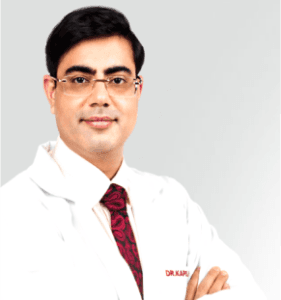
DR. KAPIL DUA, FISHRS, ABHRS-CERTIFIED, CO-FOUNDER AK CLINICS
“Patients often ask which hair transplant technique is the best. My answer is always the same: the best technique is the one that suits your hair loss pattern, donor area, and long-term goals. Careful planning before surgery is what ultimately delivers natural-looking, lasting results.”
6. What Else Matters Beyond Technique
Your final hair transplant results depend on far more than the technique used alone. Key factors that directly influence outcomes include:
- Surgeon experience and credentials: A senior surgeon who performs the extraction and implantation personally, rather than delegating to technicians, has a direct impact on graft survival and hairline naturalness
- Graft handling quality: The care taken between extraction and implantation, including preservation solution, out-of-body time, and selection of only viable grafts, significantly affects how many grafts successfully grow
- Hairline design: The angle, direction, and density of implantation determine whether the result looks natural or artificial, regardless of technique
- Post-operative care: Following prescribed washing, medication, and activity restrictions in the first two weeks is critical for graft survival
- Maintenance therapy: PRP therapy or GFC treatment, finasteride, and minoxidil help protect non-transplanted native hair from continuing DHT-related loss after surgery
- Regular follow-up: Progress evaluation at 3, 6, and 12 months allows the surgeon to identify any issues early and adjust the maintenance plan
What About FUT (Strip Method)?
FUT (Follicular Unit Transplantation) was the technique widely adopted before FUE. It involves surgically removing a strip of scalp from the donor area, which is then dissected into grafts for implantation. FUT can yield a high number of grafts in one session but leaves a permanent linear scar at the donor site.
Frequently Asked Questions
The cost of a hair transplant in India generally ranges from Rs 50,000 to Rs 4,50,000. The final cost depends on factors such as the number of grafts required, the technique used, the surgeon’s expertise, the clinic’s location, and case complexity. A consultation is the best way to determine the exact treatment plan and cost. For a full breakdown, refer to our
Hair Transplant Cost in India guide.
Bio-FUE is designed to deliver natural-looking, long-term hair restoration while focusing on graft preservation and donor area management. At AK Clinics, Bio-FUE has achieved up to a 95% graft success rate in suitable patients when performed with proper surgical planning and post-operative care.
No modern hair transplant technique significantly speeds up hair growth. Whether you undergo FUE, DHI, Sapphire FUE, or Bio-FUE, the biological growth cycle remains the same. New hair usually begins to appear around 3 to 4 months, becomes noticeably denser by 6 to 9 months, and reaches final results between 12 and 18 months.
There is no universal answer. DHI uses a specialised Choi Implanter Pen for graft implantation and is well-suited to lower graft counts and hairline-focused cases. Bio-FUE is AK Clinics’ customised hair restoration technique that incorporates refined extraction, FOFI graft handling, PRP bio-therapy preservation, and customised implantation protocols across every stage. For advanced baldness, revision cases, and high-density planning, Bio-FUE is generally more suitable. Your surgeon will recommend the approach most appropriate for your individual case.
The technique is only one part of a successful hair transplant. Factors such as accurate diagnosis, surgeon experience, donor area management, hairline design, graft handling, and long-term treatment planning have a greater influence on achieving natural-looking, long-lasting results. Even the most advanced technique cannot compensate for poor planning or incorrect surgical execution.
DHI is not necessarily better than FUE. DHI mainly differs in its implantation method, in which a Choi Implanter Pen combines slit creation and implantation into a single step. FUE remains the foundation of modern hair transplantation. The better option depends on your graft requirement, hairline planning, donor area, and the surgeon’s assessment.
Most modern stripless FUE-based techniques leave tiny dot-like donor marks instead of a long linear scar. The visibility of these marks depends on punch size, donor density, extraction pattern, healing response, and surgical planning. FUT leaves a linear scar and is not the primary technique used at AK Clinics.
For advanced baldness, the best technique depends on donor availability, safe graft extraction, beard or body donor requirement, hairline planning, and long-term coverage goals. In such cases, careful surgeon-driven planning matters more than the technique name alone. Bio-FUE at AK Clinics is specifically designed to handle high-graft-count cases with optimised protocols.
Disclaimer: This article is for informational and educational purposes only and does not constitute medical advice. Hair transplant suitability and results vary from person to person. Always consult a qualified hair transplant surgeon before making any treatment decision. Individual results may vary.









Leave a Comment