




AK Clinics
AK Clinics- India most trusted & recommended Hair, Skin, Cosmetic Surgery Clinics in India run by Dr. Kapil Dua & Dr. Aman Dua with a mission empowering one million indians to look and feel their best.
Is the Sapphire FUE hair transplant technique truly better? Learn about the technique, benefits, limitations, and how it compares with Bio-FUE hair transplant.
For individuals considering a hair transplant, the primary concern is usually the final result. Patients want to know if the procedure will produce natural-looking hair growth and reliable long-term results. However, during their research, many people come across a wide range of hair transplant techniques promoted by different clinics.
Terms like Sapphire FUE, Bio-FUE, DHI, and advanced FUE techniques are frequently discussed online and in clinic advertisements. While these methods demonstrate progress in hair restoration, they can also cause confusion for patients trying to determine which option is right for them and which technique actually affects the outcome.
In many cases, different techniques emphasise specific steps of the procedure instead of altering the entire transplant process. Some concentrate on the type of instruments used, while others aim to enhance graft handling, surgical planning, and healing support.
One technique that has gained attention in recent years is the Sapphire FUE hair transplant technique, in which a sapphire blade is used during recipient slit creation. This method primarily emphasises the instrument used for creating recipient slits in the scalp where grafts are implanted.
However, modern hair restoration techniques increasingly focus on optimising the entire transplant process rather than just a single surgical tool. Approaches such as Bio-FUE aim to improve multiple aspects of the procedure, including customised slit creation, graft handling, and healing support, all of which are essential for achieving natural-looking, long-lasting results.
To understand its role in hair transplantation, it is important to examine how Sapphire FUE functions, its benefits and limitations, and how it compares with more comprehensive methods like Bio-FUE.
Sapphire FUE is a variation of the Follicular Unit Extraction (FUE) hair transplant technique and is sometimes described as a sapphire hair transplant method because it uses a sapphire blade during slit creation, where the extracted grafts are implanted.
The overall FUE procedure remains the same, including graft extraction, graft preparation, and implantation. The primary difference lies only in the instrument used during the recipient-area preparation stage, where the sapphire blade is used to create channels for graft placement.
This means Sapphire FUE mainly focuses on the tool used for slit creation, while the rest of the hair transplant process follows the standard FUE procedure.
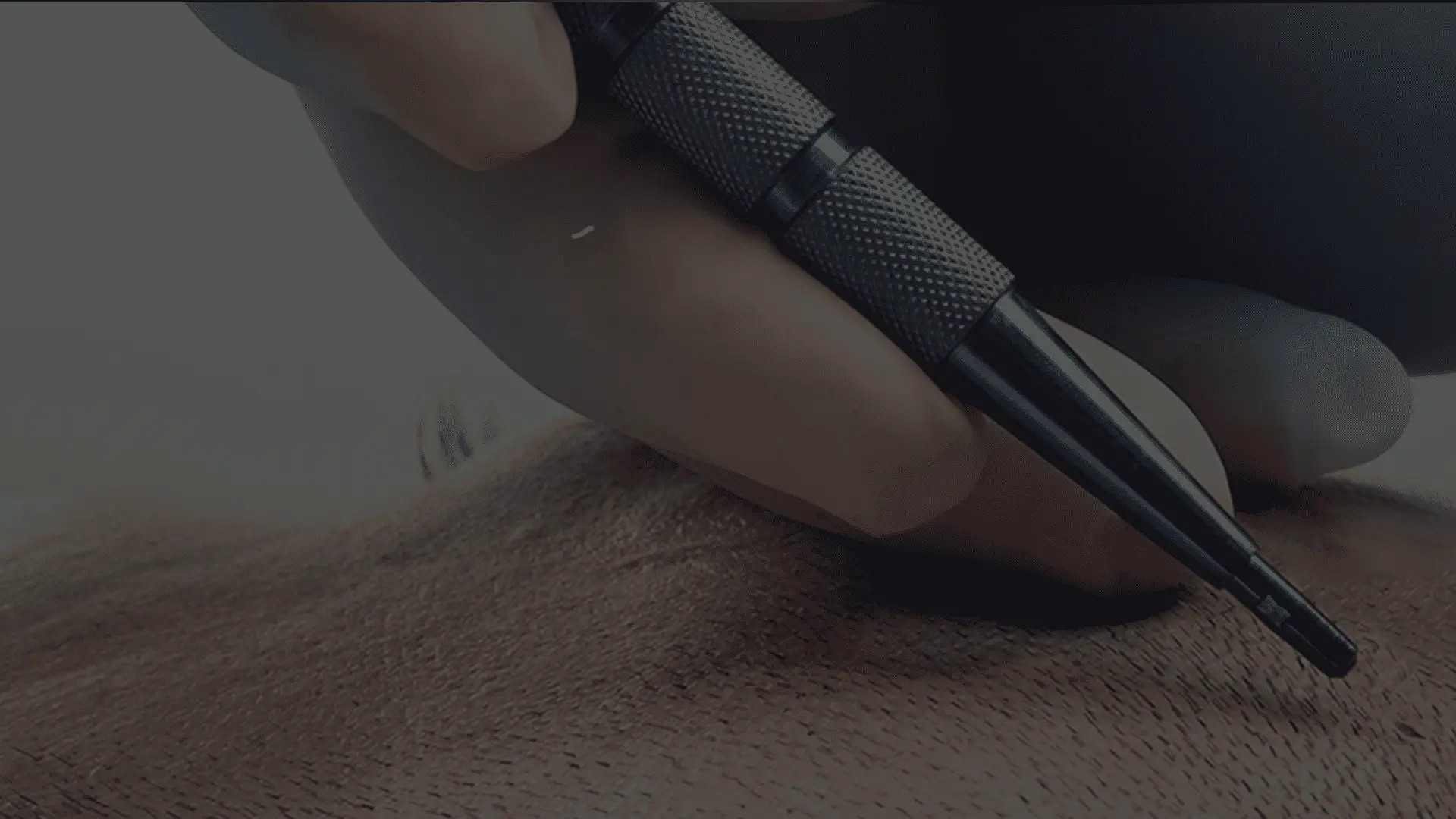
A sapphire blade is a surgical microblade used in certain hair transplant procedures, especially in the Sapphire FUE technique. These blades are generally 0.6 to 0.8 mm in width and have a fixed length, meaning their dimensions cannot be adjusted during slit creation. The blade is employed to create recipient slits in the scalp where grafts are subsequently implanted.
“It is important to understand that the blade is only one component of the hair transplant procedure. The final outcome depends far more on careful surgical planning, precise graft handling, and the surgeon’s experience. At AK Clinics, we carefully evaluate each patient’s donor hair characteristics and the length of the donor hair to determine the appropriate depth of the slits, helping ensure safe implantation and natural-looking results.”
– Dr. Kapil Dua
Chief Hair Transplant Surgeon & Managing Director, AK Clinics
Hair transplant techniques can differ in the aspects of the procedure they emphasise. Sapphire FUE primarily highlights the blade used during slit creation, whereas Bio-FUE hair transplant focuses on optimising several stages of the transplant process, including customised slit creation, graft handling, implantation planning, and healing support.
Bio-FUE also utilises a customised CTS (Cut-to-Size) blade, designed to match the graft size and patient-specific hair characteristics, allowing greater precision during slit creation.
The comparison below outlines the key differences between Sapphire FUE and Bio-FUE techniques.
| Feature | Sapphire FUE | Bio-FUE | Explanation |
|---|---|---|---|
| Blade Type | Sapphire blade (fixed dimensions) | CTS (Cut-to-Size) customised blade | Sapphire blades are manufactured in fixed sizes, whereas CTS blades used in Bio-FUE are customised according to graft size and donor hair shaft length. |
| Slit Formation | Standard slit creation with a fixed blade | Micro-slit formation using customised blades | Bio-FUE allows slit creation tailored to graft size and hair characteristics, helping improve control over graft placement and density planning. |
| Bleeding | Comparatively, more bleeding may occur during slit creation | Designed to minimise bleeding | Customised slit depth and blade design in Bio-FUE may help reduce tissue trauma during slit creation. |
| Procedure Time | Depends on graft number and slit creation approach | Depends on graft number and surgical planning | Procedure duration is influenced mainly by graft numbers and density planning, though customised slit planning may improve surgical workflow. |
| Cost | Higher due to the specialised blade | Comparatively lower | Sapphire blades increase instrument cost, while Bio-FUE focuses more on surgical technique and customised blade design. |
Although Sapphire FUE is often highlighted for the blade used during slit creation, understanding its limitations can help patients make more informed decisions about their hair transplant treatment options.
Key limitations include:
At AK Clinics, our surgical team has experience using the Sapphire FUE blade for hair transplant procedures. However, due to factors such as the fixed blade length and comparatively increased bleeding observed during slit creation, our surgeons generally prefer the Bio-FUE technique, which allows greater customisation during the procedure.
If a patient specifically prefers the Sapphire FUE approach, it can still be considered after a detailed consultation and scalp evaluation with our surgeons.
In hair transplantation, the final results depend far more on surgical expertise, donor area quality, graft handling, and careful planning than on the blade used for slit creation alone. While the Sapphire FUE technique focuses on the instrument used during one stage of the procedure, the overall outcome is influenced by several other important factors throughout the transplant process.
For this reason, choosing the right technique should always involve a comprehensive scalp evaluation and a treatment plan tailored to the patient’s hair characteristics, graft requirements, and long-term hair-loss pattern. The ultimate goal of any hair transplant procedure is to achieve natural-looking, safe, and long-lasting results.
If you are considering a hair transplant in India, consulting an experienced surgeon can help determine the most appropriate treatment approach for your hair loss. Patients exploring treatment options at specialised centers in Delhi, Ludhiana, or Bangalore can benefit from a detailed scalp evaluation and personalised treatment plan.
📞 Call at +91-97799-44207 or WhatsApp to book your consult with our experts and understand which hair transplant technique may be right for you.


AK Clinics- India most trusted & recommended Hair, Skin, Cosmetic Surgery Clinics in India run by Dr. Kapil Dua & Dr. Aman Dua.


Leave a Comment